Gynecomastia vs Chest Fat: How Can You Tell the Difference?
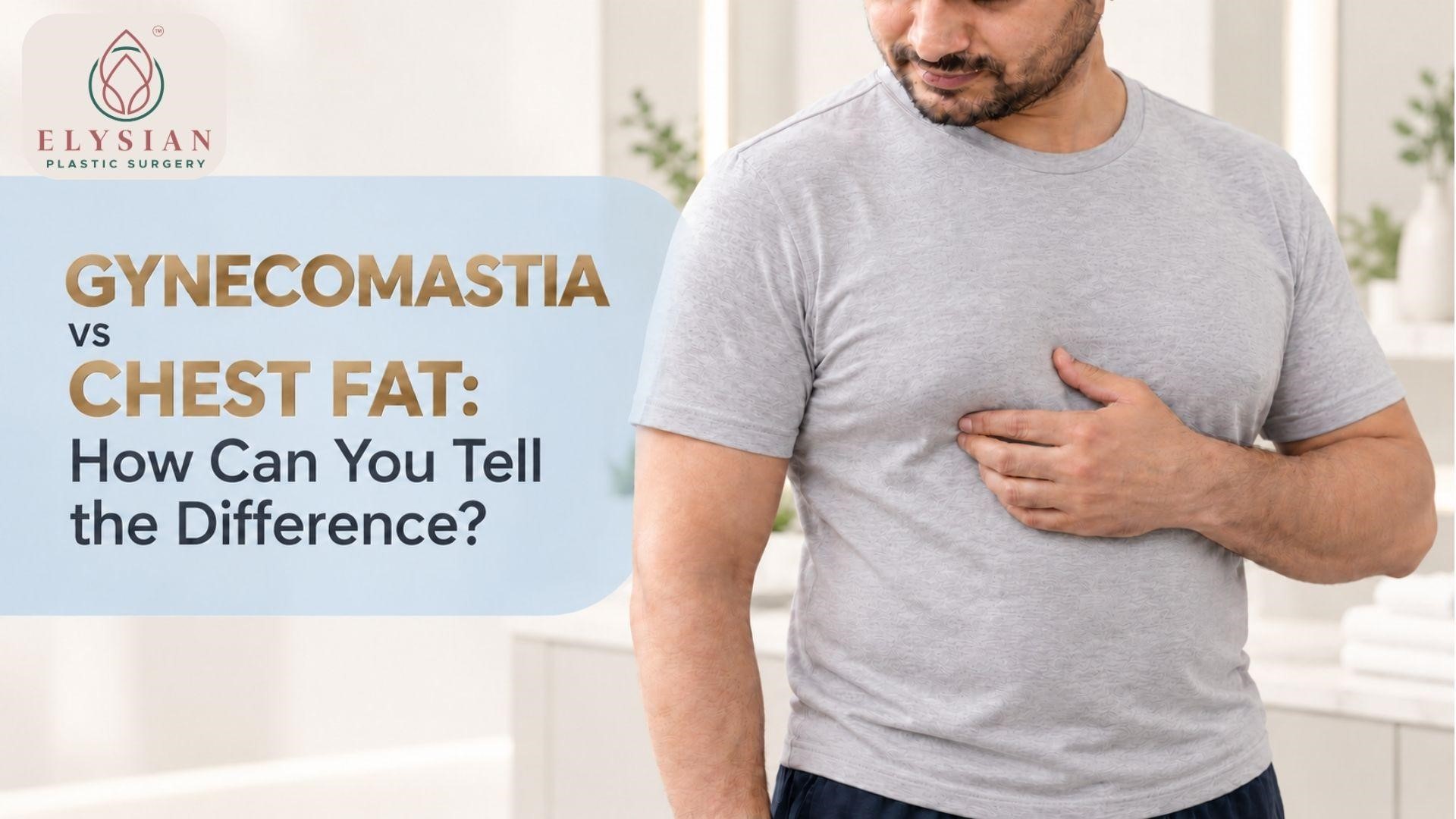
A fuller chest in men isn’t always down to excess fat. Sometimes, it’s breast gland tissue that has grown larger, and in many cases, there’s a bit of both. You might lose weight and notice your chest getting smaller, but the firm tissue beneath the nipple may still be there. Exercise won’t remove that gland. This is why, even if you’re searching for the best gynecomastia surgery in Surat, it’s worth getting your chest examined first. Depending on what’s causing the fullness, you may need liposuction, gland removal, both, or no surgery at all.
What is Actually under the Skin?
Gynecomastia is an overgrowth of glandular breast tissue in men. It develops when the balance between oestrogen and testosterone shifts, which can happen in puberty, with ageing, after certain medicines, in liver or thyroid disorders, or with anabolic steroid use. It is common and usually harmless, and in teenagers it often settles by itself, although in other men it persists.
Chest fat, called pseudogynecomastia, is ordinary fat sitting over the pectoral muscle, and it usually follows overall body weight. Many men carry both, so the mirror alone is a poor judge.
Checks You can do at Home
You can get a rough idea at home. Press gently around the nipple: if there is a firm, rubbery disc directly beneath it, which may be tender, that is gland. If the chest feels soft and spreads evenly with no distinct lump, that points to fat. Lying flat helps too, because gland tends to keep its mound behind the nipple while fat spreads out and flattens.
Your weight history is another clue. If your face and waist slimmed down but the chest stayed the same, glandular tissue is the likelier cause. Chest workouts build the muscle underneath and, when combined with weight loss, can reduce fat, but they cannot shrink gland. So months of training with no change in the central lump tells you something in itself. A hard lump, a lump on one side only, or any nipple discharge needs to be examined without waiting.
How the Diagnosis Is Confirmed
When a patient comes in, the best plastic surgeon in Surat examine the chest sitting and lying down and grade it on the Simon classification, which runs from grade 1 to grade 4 depending on size and how much loose skin there is. A breast ultrasound then shows how much of the enlargement is glandular tissue and how much is fat. If a lump is hard, irregular or one-sided, further imaging and sometimes a biopsy are needed, because male breast cancer, although uncommon, must not be missed.
Where there is no obvious cause, blood tests for hormones, liver and thyroid function can help. The surgeon also goes through every medicine you take, since several can trigger gland growth. The surgeon may ask about alcohol, cannabis, steroids and supplements without judgement, because an honest answer changes the plan.
Why the Tissue Decides the Treatment?
Because the two tissues behave differently, the treatment differs too. Fat responds to liposuction. Gland is dense and fibrous and does not suction out reliably, so it is removed through a small cut along the lower edge of the areola, usually with liposuction around it to blend the contour. A mixed chest gets both, and grade 3 or 4 cases with hanging skin may also need skin removal, which leaves longer scars.
Liposuction removes fat, but it doesn’t work the same way on breast gland tissue. The gland is firmer and harder to remove through suction alone. That’s why some men are left with a lump even after the surrounding fat has been removed. If you’re searching for a centre providing you the best liposuction surgery in Surat to treat a fuller chest, the first thing to find out is whether liposuction is even the right procedure for you. When both fat and gland are present, the surgeon may need to remove the gland separately and use liposuction for the surrounding fat.
The operation usually takes one to two hours and is often done as a day-care procedure. Some cases need a thin drain or a firm dressing for the first day or two. After that you wear a compression vest for about four to six weeks, and while swelling is at its peak, it helps to sleep on your back with your head slightly raised. Most patients are back at desk work in around a week and avoid heavy chest exercise for about four weeks, and swelling eases over several weeks to a few months. These ranges differ from person to person.
Risks and Realistic Expectations
Like any surgery, this one carries risks, including bleeding, fluid collecting under the skin, contour irregularity, asymmetry, changes in nipple sensation and, occasionally, a revision procedure. Patients often ask about scars. The incision at the areola edge usually fades to a fine line over several months, although scar quality depends on skin type and healing. Results vary from person to person. Fat removed by liposuction does not return in the treated area, but if you put on a lot of weight later, fat can collect elsewhere on the chest.
Surgery is not always the first step. When the enlargement is recent, especially in teenagers or after starting a new medicine, it sometimes settles on its own, and in that case watching and waiting can be the right advice.
Choosing Who Operates
Before going ahead with surgery, find out exactly what’s causing the fullness in your chest. Is it fat, breast gland tissue, or a mix of both? Ask your surgeon how they plan to treat it and why they’ve chosen that method.
While searching for the best plastic surgery centre in Surat, it’s worth finding out where the surgery will be performed, whether a qualified anaesthetist will be present, and what arrangements are in place if something goes wrong. These details matter just as much as the surgeon’s experience. And who do you contact if something doesn’t feel right after surgery?
At Elysian Plastic Surgery Centre, the surgeon first examines the chest to understand what’s causing the fullness and then discusses the available options. You may find that surgery isn’t necessary, or that the problem needs a different approach than you expected. That’s worth knowing before making a decision.
Dr. Viral Patel, MBBS, MS, DNB, Board-Certified Plastic Surgeon, NMC Registration No. G-27224.
FAQs
1. Can gynecomastia go away on its own?
In teenagers, and when a medicine is the trigger, it often settles within a year or two once the cause passes. Gland that has persisted for a long time rarely shrinks without treatment, so an enlargement that stays unchanged for months deserves a proper assessment.
2. How do I choose the best gynaecomastia surgery in Surat?
Start with the diagnosis. Surgery is planned around what your chest contains: gland, fat or both, plus how much skin is loose. Ask the surgeon to examine you, explain your grade, name the technique planned, and describe the scars and recovery before you agree to anything.
3. What should I look for in the best liposuction surgery in Surat?
Liposuction removes fat, not loose skin or glandular tissue, so first confirm you are a suitable candidate. Ask which technique is planned (traditional, laser or ultrasound-assisted), where the surgery takes place, who administers anaesthesia, and how much fat can be removed safely in one session.
4. How do I pick the best plastic surgery centre in Surat?
Look at the facility before the brochure. A centre should have a proper operation theatre, a qualified anaesthetist, emergency equipment and a clear follow-up schedule. Ask what happens if a complication arises after discharge and who you would see, and ask for the answer in writing.
5. How do I find the best plastic surgeon in Surat?
A surgeon’s qualifications are a sensible place to start. Check for an MCh or DrNB in Plastic Surgery and verify their medical registration. When you meet the surgeon, talk about the operation you have in mind. Have they performed it often? What complications have they seen? How are those handled? You should leave the consultation knowing what the surgery involves, including its limitations, rather than just being shown what the results might look like.